

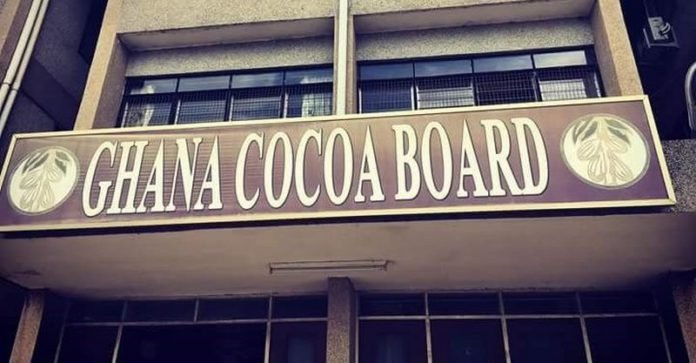
Accra, August 28, 2025 — The Ghana Cocoa Board (COCOBOD) is anticipating more than $4 billion in inflows before the end of the year, a development expected to boost the Bank of Ghana’s reserves and provide crucial support for the local currency.
Governor of the Bank of Ghana, Dr. Johnson Asiama, disclosed the expected inflows in an exclusive interview with Joy Business, explaining that the funds form part of COCOBOD’s new financing arrangement for the 2025/26 crop season.
Boost to Reserves and the Cedi
According to Dr. Asiama, the inflows will not only enhance the central bank’s reserves but also strengthen its capacity to intervene in the foreign exchange market when necessary.
“This development signals to the market that the Bank of Ghana is well-positioned to support businesses, commercial banks, and the wider economy,” he said.
As of July 2025, the Bank’s Economic and Financial Data pegged Ghana’s international reserves at $11.1 billion, a figure that analysts expect to improve once the new funds arrive.
A Shift in Cocoa Financing
COCOBOD introduced a new funding model in 2023, requiring international cocoa traders to deposit at least 60% of their forward contract values at the start of each season.
The approach replaced the decades-old pre-export syndicated loan system from international banks. Under the arrangement, deposits from traders are channeled to licensed cocoa buying companies (LBCs), which in turn purchase beans directly from farmers, with COCOBOD serving as the intermediary.
Cedi’s Stability Outlook
Dr. Asiama expressed optimism about the local currency despite recent market volatility, assuring businesses of stability ahead.
“As regulator, we have taken the needed actions to ensure that things do not get out of hand,” he noted, adding that Ghana’s macroeconomic fundamentals remain solid.
He further emphasized that the central bank’s strategy—anchored on “discipline, transparency, and firm regulation”—will ensure the cedi trades freely but predictably.
At the same time, the Governor warned against individuals exploiting loopholes through offshoring, black-market trading, or falsifying import documentation, stressing that such actions will attract sanctions.
Market Confidence
Analysts say the anticipated inflows, combined with the BoG’s firm regulatory stance, could restore investor and business confidence in the cedi, particularly as global commodity markets remain unpredictable.
Source – My News Ghana