The Never-Ending Cocoa Producer Price Politics: Economic Realities vs Political Promises
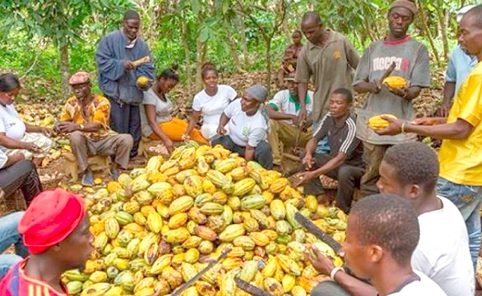
Every cocoa season in Ghana, a familiar political drama unfolds — the ruling party defends the producer price offered to farmers while the opposition criticizes it as inadequate. This year has been no different, reigniting debates over whether cocoa farmers are truly receiving their fair share of Ghana’s “golden bean.”
Opposition vs Ruling Party – A Recurring Battle
It has almost become a ritual. The ruling government, led by the New Patriotic Party (NPP), insists that the price is fair given economic constraints. The opposition National Democratic Congress (NDC), on the other hand, argues that cocoa farmers deserve far more.
Ironically, the roles were once reversed. In opposition, the NDC criticized prices under their own administration and promised farmers a higher rate if elected. The NPP now finds itself on the receiving end of similar attacks.
Notably, during the 2023/24 cocoa season, an infographic circulated widely suggesting that the NPP government retained 74.53% of the world market price per ton, offering farmers only 25.47%. In contrast, under the 2016/17 season, the NDC allegedly retained 33.94%, giving farmers 66.06%.
Dr. Cassiel Ato Forson, now Finance Minister, repeatedly stressed in opposition that farmers deserved a “fairer deal.” However, with power now in their hands, the new NDC-led government has faced the reality of balancing promises with economic limitations.
The Economic Realities of Cocoa Pricing
The cocoa producer price cannot be determined by politics alone. Several factors shape the outcome, including:
-
World market prices – which are often volatile.
-
Exchange rates – the depreciation of the cedi has a huge impact on revenues.
-
Forward sales vs spot prices – Ghana Cocoa Board (COCOBOD) largely relies on forward sales contracts.
-
Operational costs of COCOBOD – debt servicing and administrative costs take a significant portion.
-
Expected crop yields – projections affect revenue distribution.
If the pricing formula were followed strictly, there are instances where farmers could even receive lower prices than the previous season due to global market fluctuations. Yet, political considerations often make this impossible.
Government’s New Policy Steps
Despite criticism, the government has introduced measures aimed at cushioning cocoa farmers. These include the reintroduction of free fertilisers, insecticides, fungicides, spraying machines, and flower inducers. Analysts see these as attempts to appease farmers who may feel shortchanged by the actual price offered.
The Political Realities
Beyond economics, cocoa pricing is a deeply political issue. Cocoa-growing regions remain key battlegrounds in Ghana’s elections, making producer price announcements more than just fiscal policy—they are political statements.
No matter how well COCOBOD explains the economics, the benchmark will always be the promises made in opposition. This dynamic ensures that cocoa politics will continue to dominate Ghana’s political discourse.
Global Cocoa Market Trends
Globally, cocoa prices have been fluctuating due to climate change impacts, reduced production in West Africa, and increasing demand for chocolate. Analysts note that while international buyers are benefiting from higher margins, farmers in producing countries like Ghana and Ivory Coast still struggle with relatively low farm-gate prices.
This imbalance continues to fuel calls for reform in Ghana’s cocoa sector, particularly around COCOBOD’s monopoly on sales and pricing decisions.
What Lies Ahead?
With three years until the next general elections, the current government has some time to rebuild trust among cocoa farmers. However, the opposition is unlikely to back down and will continue to use unmet promises as a campaign weapon.
One big question remains: Will future opposition parties refrain from making bold cocoa price promises, knowing the harsh economic realities?
If history is any guide, the answer is no. Cocoa pricing will remain a powerful political tool, ensuring that the cycle of promises and criticism continues.
Source: My News Ghana