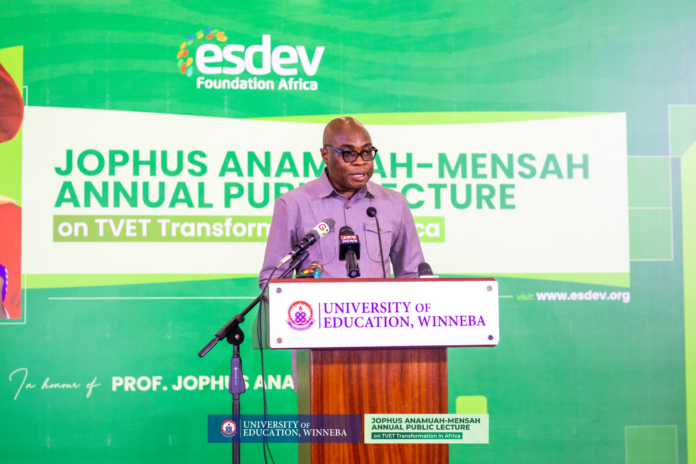
The Vice-Chancellor of the University of Education Winneba (UEW) has called for a shift towards skills-focused education as a key strategy to address rising unemployment in Ghana.
According to the Vice-Chancellor, Ghana’s current education system must evolve to better equip students with practical and employable skills that align with the demands of the job market. He emphasized that academic qualifications alone are no longer sufficient to guarantee employment in today’s competitive economy.
Skills-Focused Education Ghana: Why It Matters for Employment
Speaking on the issue, the UEW Vice-Chancellor highlighted the importance of integrating technical, vocational, and entrepreneurial training into the educational curriculum. He noted that skills-focused education Ghana is essential in preparing students to become job creators rather than job seekers.
He explained that many graduates leave school without the necessary hands-on experience required by employers, which contributes significantly to the country’s unemployment challenges. By prioritizing skills development, institutions can better prepare students for real-world opportunities.
Skills-Focused Education Ghana and the Future of Work
The call for skills-focused education Ghana comes at a time when industries are rapidly evolving due to technological advancements and changing economic conditions. Employers are increasingly looking for individuals who possess practical skills, adaptability, and problem-solving abilities.
The UEW Vice-Chancellor stressed that aligning education with industry needs will not only improve employability but also drive innovation and productivity across various sectors of the economy.
He further noted that collaboration between educational institutions and industry players is crucial in ensuring that training programs remain relevant and impactful.
Skills-Focused Education Ghana: Addressing Youth Unemployment
Youth unemployment remains a major concern in Ghana, with many graduates struggling to secure meaningful employment after completing their studies. The emphasis on skills-focused education Ghana is seen as a proactive step towards tackling this issue.
By equipping young people with practical skills such as entrepreneurship, digital literacy, and technical expertise, the country can create a more resilient and self-sustaining workforce.
The Vice-Chancellor also encouraged policymakers and stakeholders in the education sector to support reforms that prioritize skills development and innovation.
Skills-Focused Education Ghana: A Call to Action
The UEW Vice-Chancellor’s remarks serve as a strong call to action for stakeholders in Ghana’s education sector. He urged institutions to rethink their teaching approaches and adopt strategies that focus on practical learning outcomes.
He also called on students to take advantage of opportunities that allow them to develop skills beyond the classroom, including internships, apprenticeships, and self-learning initiatives.
As discussions around education reform continue, the push for skills-focused education Ghana is expected to play a central role in shaping the future of employment and economic growth in the country.
Source:My News Ghana